YC F24 · Enterprise AI
We made CTGT a brand banks can trust.
Why did CTGT need a new brand?
Where CTGT was
CTGT sells to CIOs at regulated companies through warm intros. After the intro, a second decision-maker checks the website. CTGT told us deals were decided there.
What CTGT asks its buyers to do
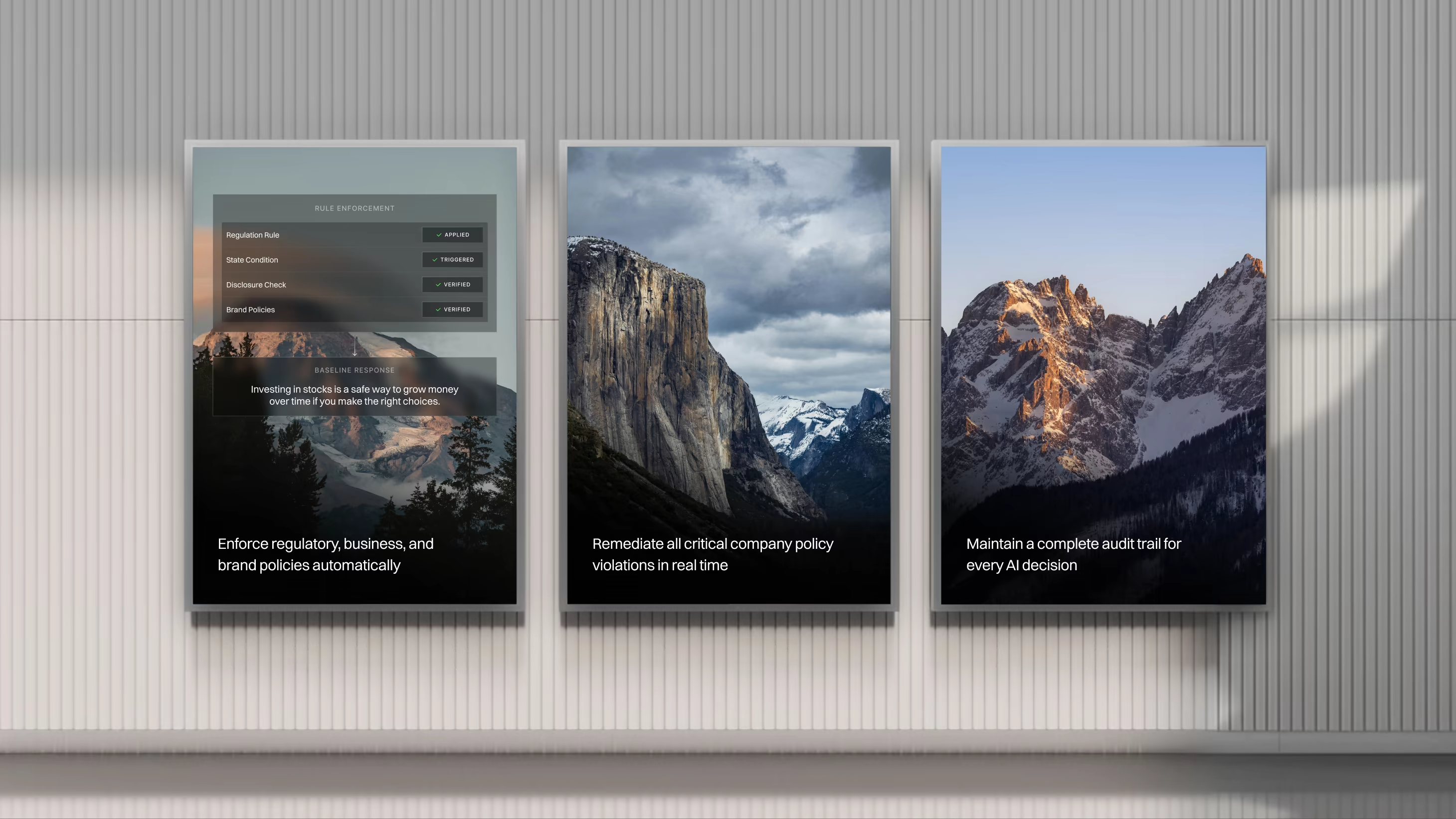
Put CTGT between their AI models and their customers, with an audit trail a regulator can read.
What they asked us for
A new brand and website, live for CTGT's December launch.
Why it mattered
A bank won't run AI it can't audit, or trust a vendor whose website looks unfinished.
Critical challenge
01 / 02
CTGT had to pass the second buyer's check without naming its customers.
Problem
Regulated customers rarely let vendors show their logo. So CTGT couldn't lean on a logo wall.
Why it mattered
The reviewer usually sits in risk, compliance or IT, looking for a reason to say no. Most AI startups pile on proof. CTGT had to look serious with less.
What we did
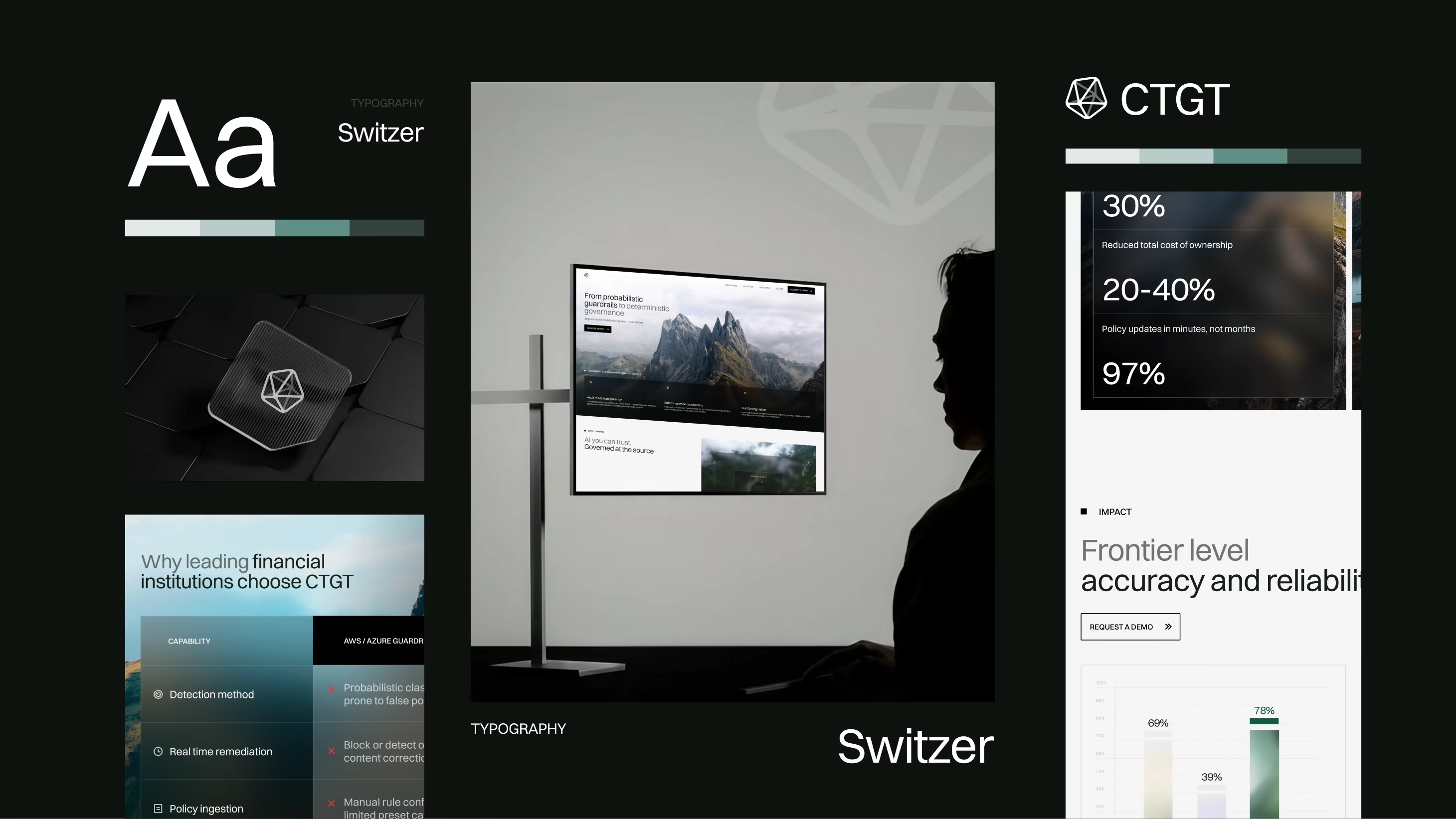
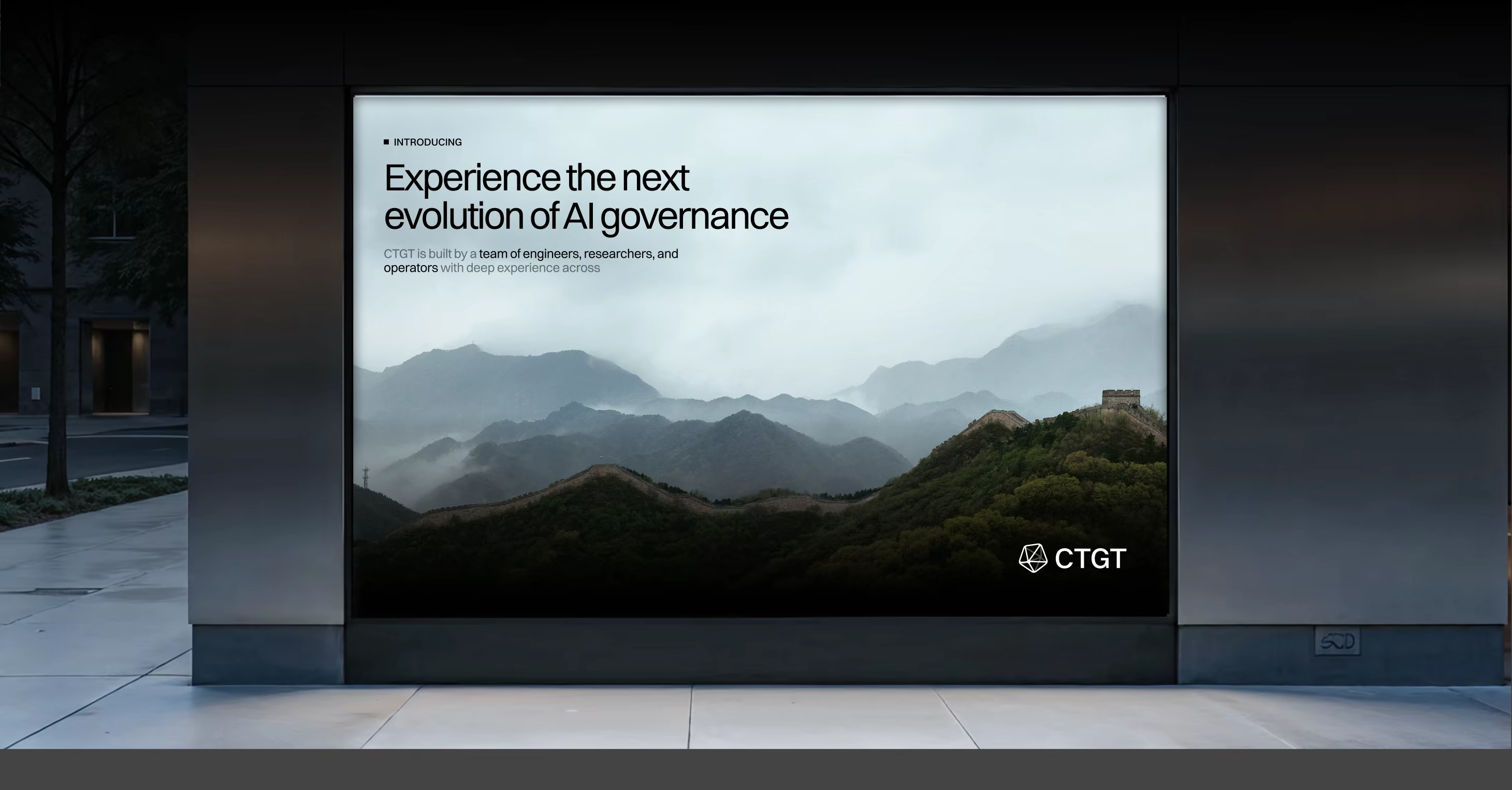
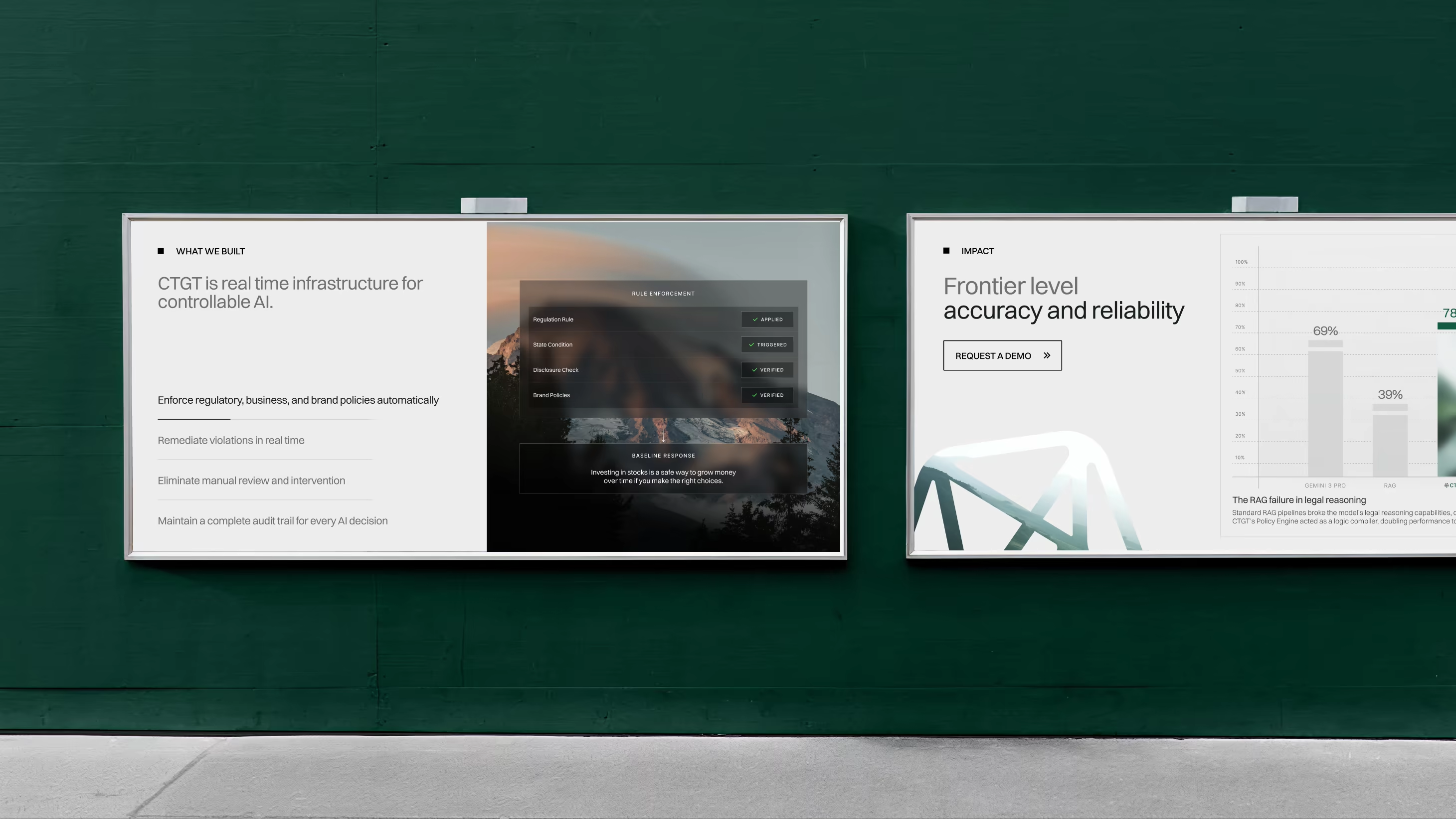
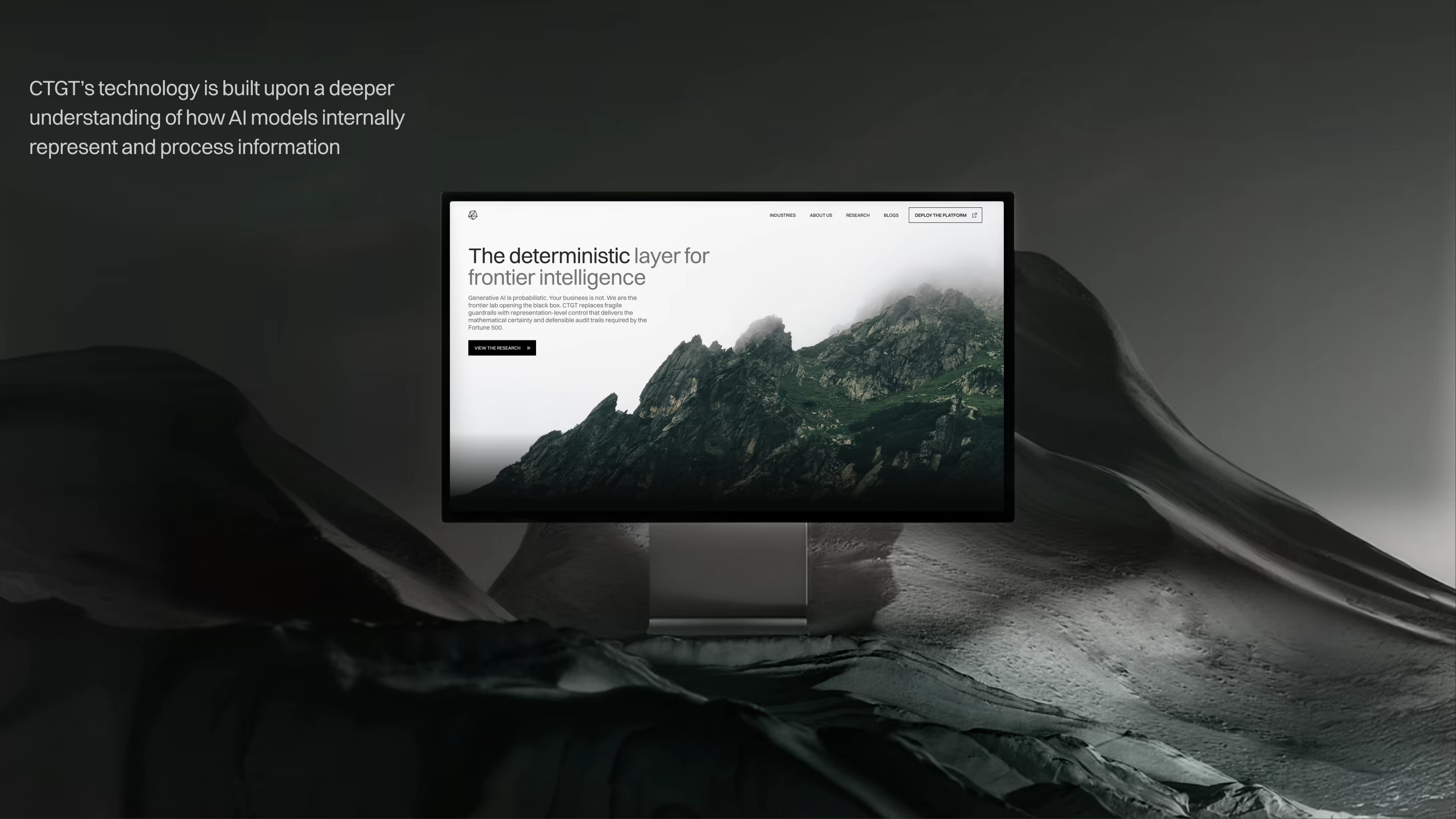
We showed three directions and chose the calmest: light, landscapes and precise type, closer to a research institute than a startup. In place of customer logos, we used proof CTGT could publish: named endorsements, press logos and sourced benchmarks. "Contact us" became an application for partnership, for company emails only.
Outcome
The homepage went live on 16 December 2025, CTGT's launch day. The full site and brand book followed in CTGT's own Webflow account.

Critical challenge
02 / 02
The product had to make sense to executives who aren't ML researchers.
Problem
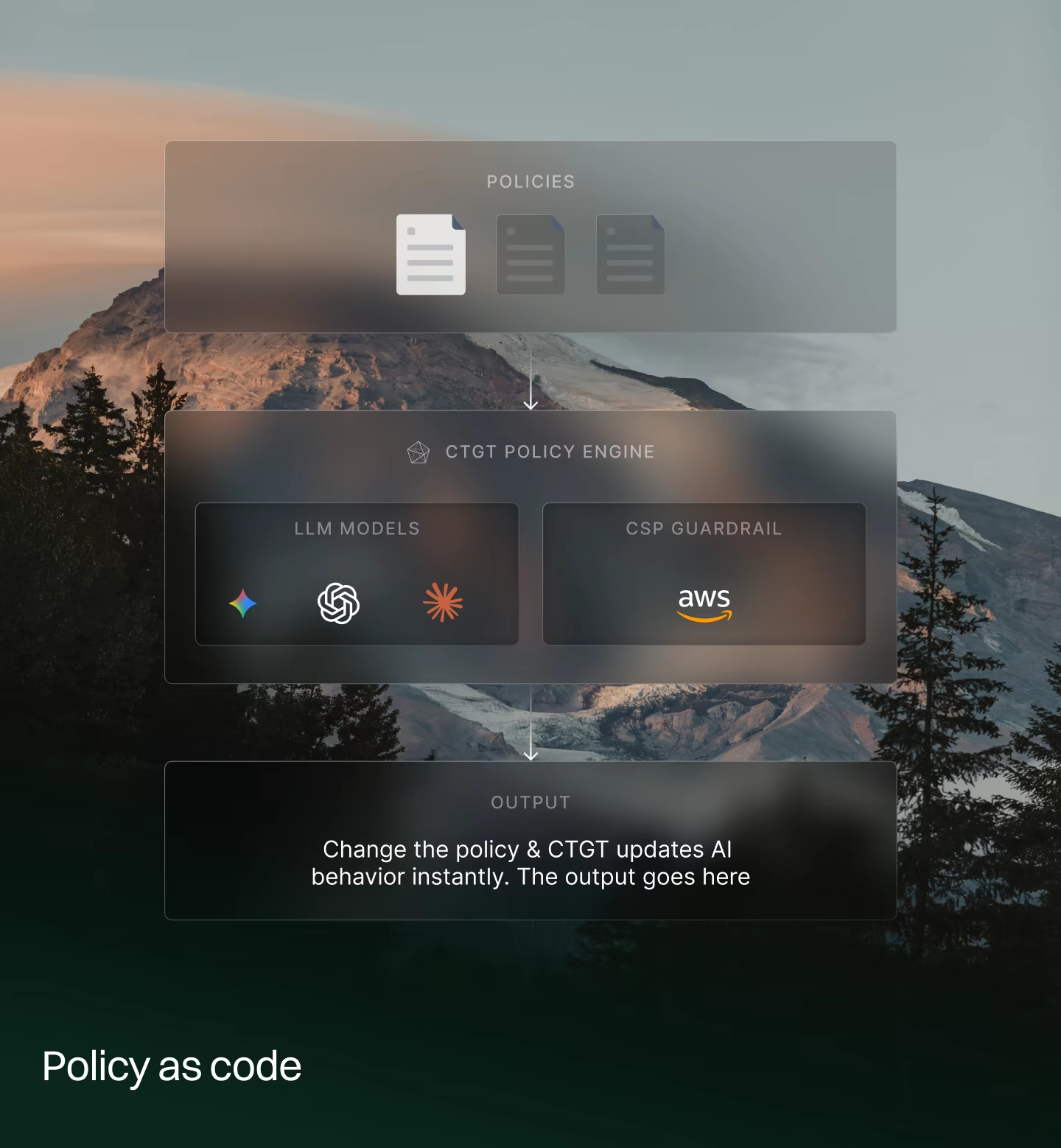
CTGT changes how a model behaves without retraining it or rewriting prompts. Most buyers can't picture that.
Why it mattered
A CIO has to explain the purchase to a board. If they can't draw where CTGT sits in the stack, they can't buy it.
What we did
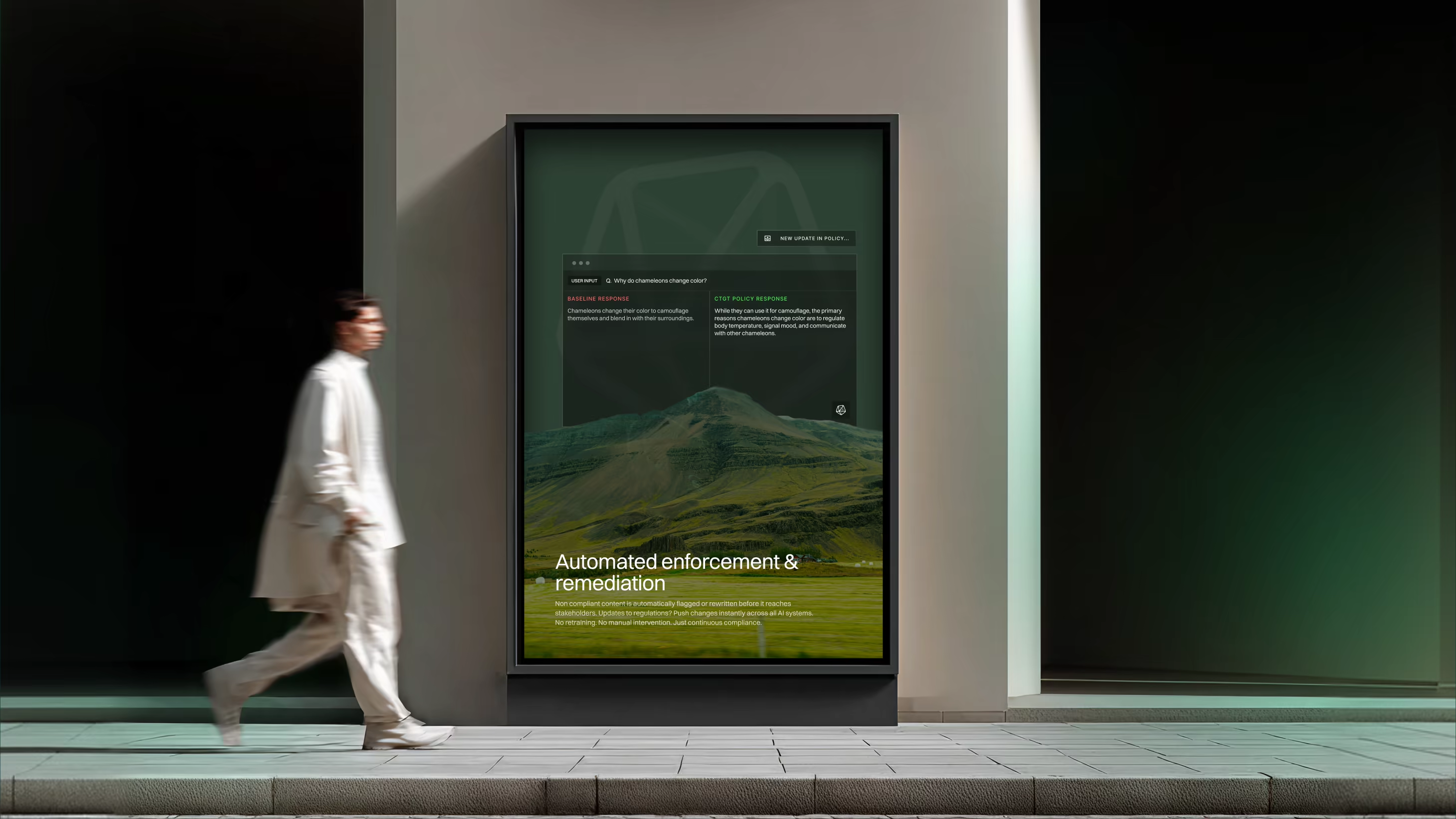
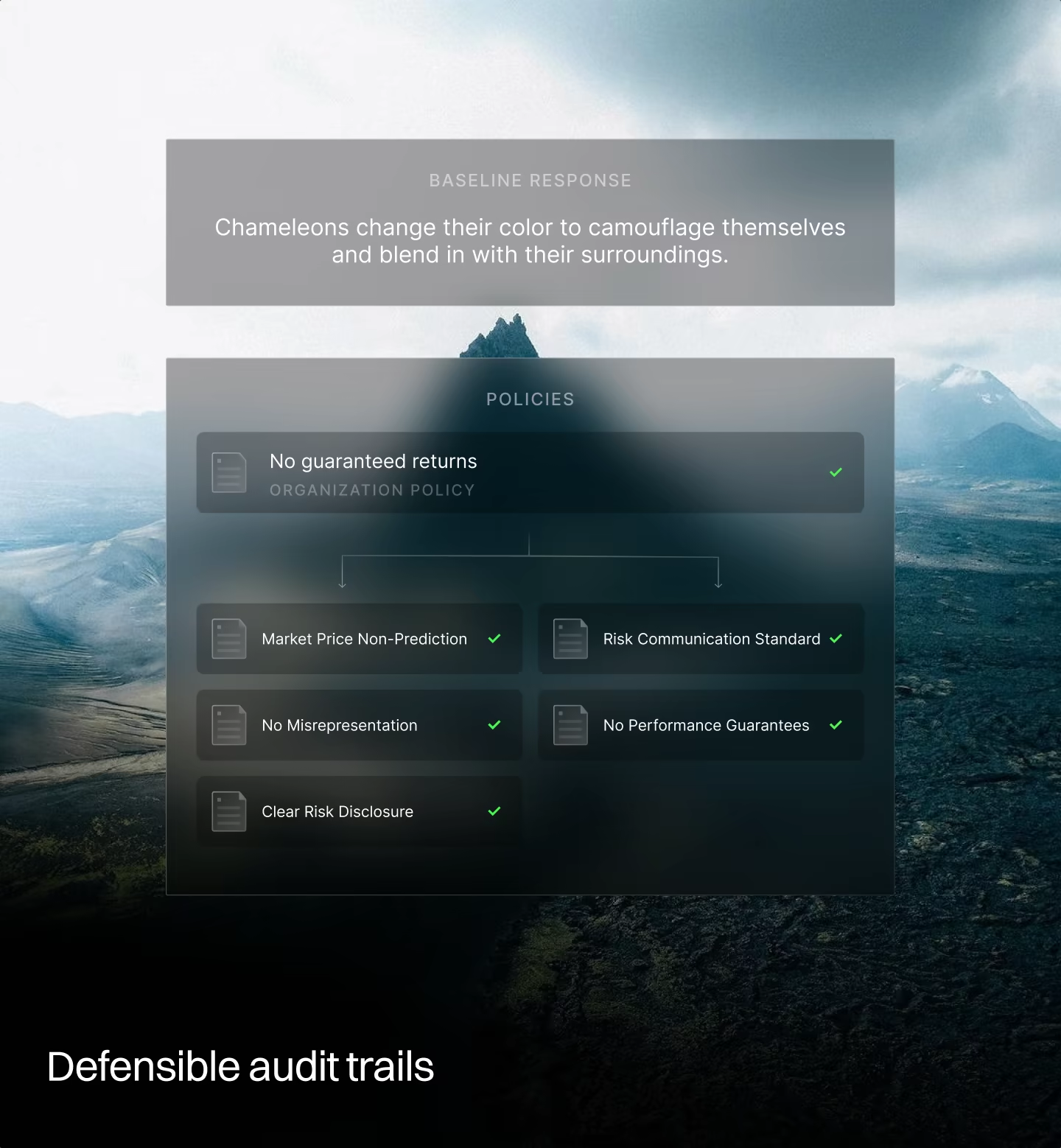
We built a policy engine animation: a bad answer flagged, then corrected, side by side. When analytics showed visitors gave it under five seconds, we cut it to the part that mattered. The architecture became one stack, policies, then CTGT, then the model, then the output: change the policy and the model follows. Industry pages run challenge, solution, then ROI.
Outcome
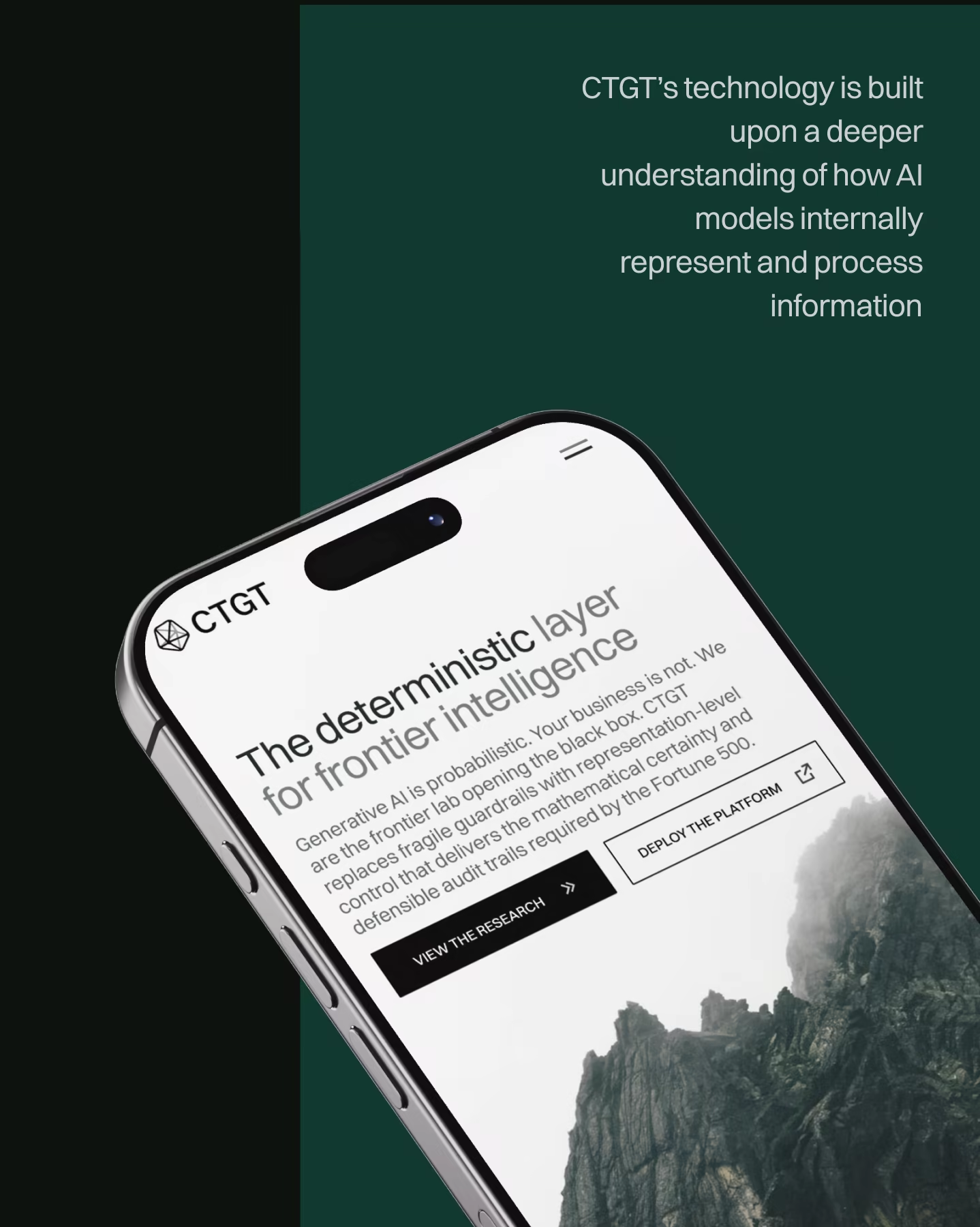
At handoff, the homepage led with research, not a demo button: "View the Research" was the primary call to action. CTGT's team now runs the site itself.
And this is where CTGT ended up.
CTGT left with a brand book, logo rules, a sales deck, social banners and Loom walkthroughs for its Webflow site.
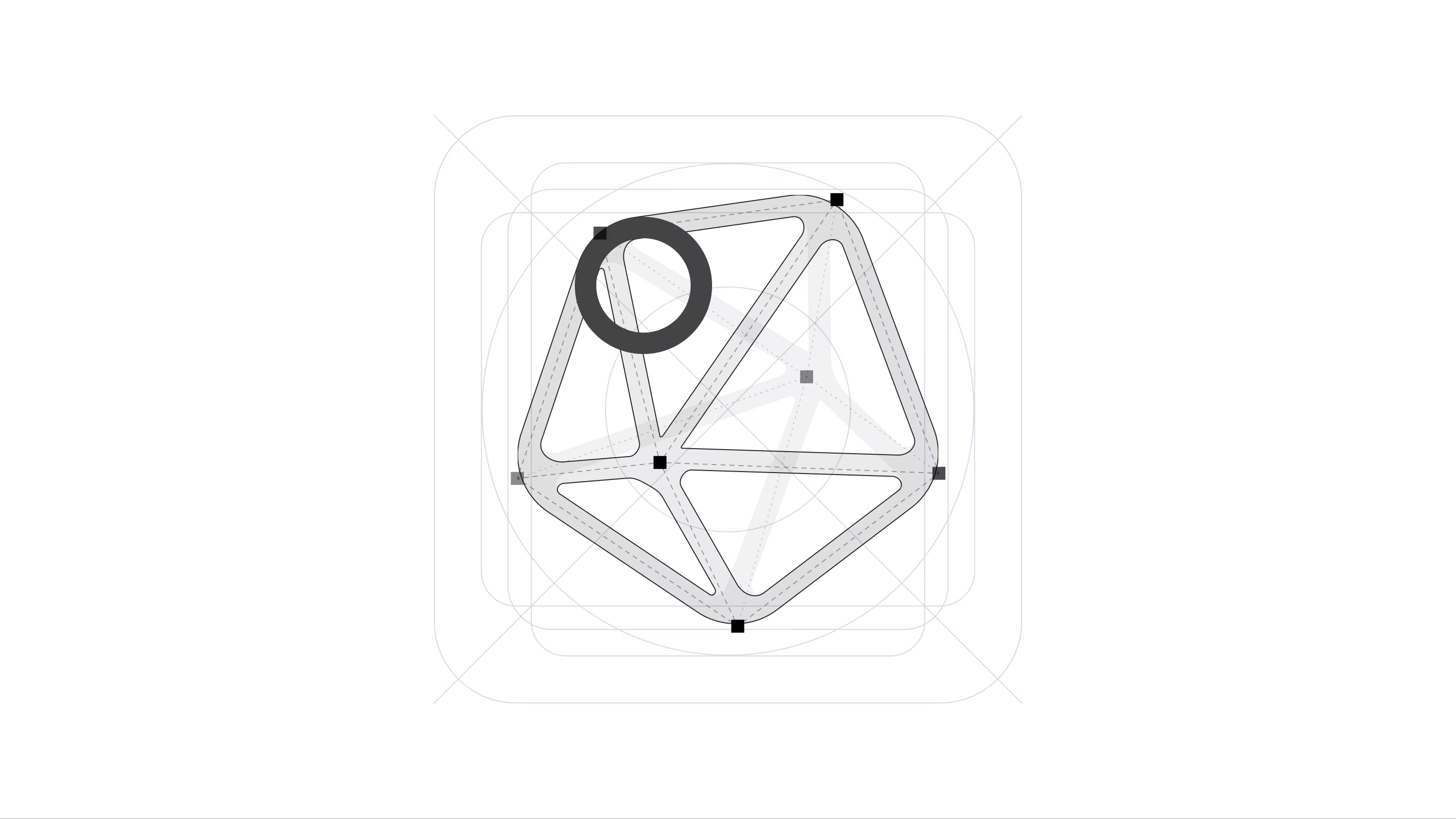
The logo runs in dark green-black (#17201B), pure black only on its own. Months later, CTGT's team was still checking the guide.
CTGT kept its name and wrote the final copy. We designed the brand, built the site and made the motion.
We work founder to founder. If your rebrand needs a steering committee, a larger firm fits better.
Branding, web design, motion design and Webflow development by PIXELUP LABS, 2025–2026.
If your buyers check your website before they take the call, book a call.
Frequently asked questions
PIXELUP LABS designed CTGT's brand and website in 2025 and 2026, and built the site in Webflow. CTGT is a YC F24 applied interpretability lab that sells AI governance to regulated companies. The homepage went live for CTGT's launch on 16 December 2025.
We build brands, websites and products for startups that need to command enterprise trust. Brand identity, website design, product design, design systems, motion and sales assets, all designed together as one system.
Greptile doubled demo requests in week one and raised a $25M Series A within six months of launch. Sully scaled 26x in 11 months after its redesign. Sainapse relaunched ahead of general availability and is now deployed by Fortune 500 companies including Ford and Freshworks.
Brand sprints take 2–4 weeks. Brand plus website projects take 6–8 weeks from kickoff to launch. We regularly deliver under hard deadlines like fundraise announcements and launch dates.
Brand sprints are $15,000. Brand plus website projects run $25,000 to $40,000. Retainers start at $6,000 a month. See current services and pricing on Contra.
You work directly with the team on Slack, with fast turnarounds and quick iterations. No account managers, no layers, no surprises.
Rarely. Most clients come to us with something functional that no longer matches their ambition. We keep what works and rebuild what holds you back.
Book a discovery call or message us on Telegram. We will review where you are today and tell you honestly what we would change.