Rebranding is changing how a company is perceived by changing what it says, how it looks, and sometimes what it's called. It comes in three types: a brand refresh updates the look and keeps the message, a partial rebrand changes the message or the identity, and a full rebrand changes the positioning first, then everything that expresses it, sometimes the name. B2B companies usually rebrand at a deadline: a raise, a move upmarket, a merger, a rename or a launch.
Most people think a rebrand is a new logo. It isn't. A new logo with the same message is a refresh.
We sell rebrands, so read this with that in mind. Three of the 12 examples below are our clients, marked.
TL;DR
For B2B founders and marketing leads deciding whether to rebrand:
- Pre-PMF or mid-pivot: don't rebrand. There's nothing settled to say yet.
- The message still works, the look has aged: a brand refresh.
- You raised, moved upmarket or changed who you sell to: a partial or full rebrand, positioning first.
- The name is taken, confusing or too small for what you sell now: a full rebrand with a rename. Budget months for trademark and search.
What is rebranding, and what isn't?
Rebranding changes what a company says about itself, not just how it looks. There are three types, and the line between them is the message.
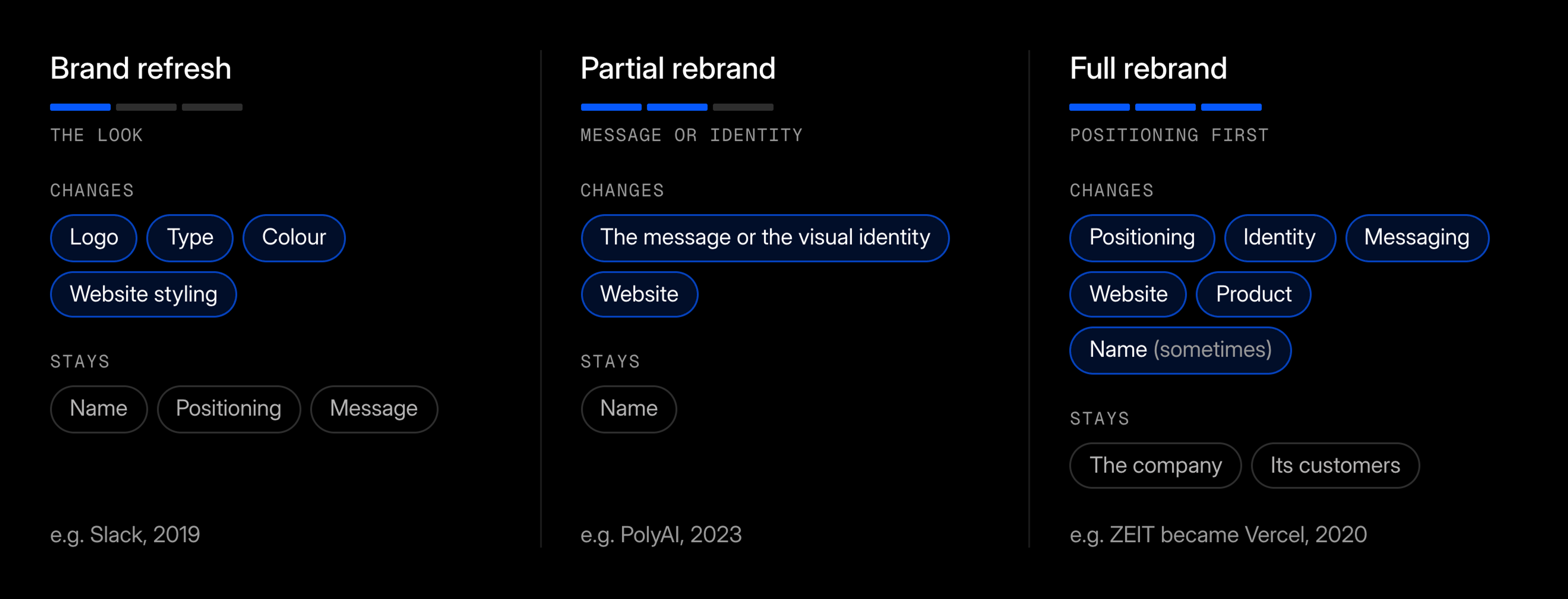
| Type | What changes | What stays | Typical B2B trigger | Example |
|---|---|---|---|---|
| Brand refresh | Logo, type, colour, website styling | Name, positioning, message | The look has aged next to competitors | Slack, 2019: logo cut from 11 colours to 4 |
| Partial rebrand | The message or the visual identity, plus the website | The name | A raise, a move upmarket, a new buyer | PolyAI, 2023: new identity, messaging and website |
| Full rebrand | Positioning first, then identity, messaging, website, product, sometimes the name | The company and its customers | A merger, a new category, a name that can't carry the business | ZEIT became Vercel, 2020 |
More on the difference between a brand refresh and a rebrand.
Our rebrands that mattered most changed one sentence before a pixel. Workers.io sold workers, not agents, and Sully's website redesign turned out to be a sales-enablement problem. Bland built its brand on a deliberately bland persona.
Why do B2B companies rebrand?
B2B companies rebrand when what they sell, who buys it, or what they're called outgrows the brand. In practice it's usually a date. At least 6 of our first 35 projects were timed to a funding announcement or a raise, and at least 7 more to a launch, a rename or a conference.
A raise, and a move upmarket
Investors bought the next chapter, and the website still sells the last one. ZEIT announced its new name, Vercel, with its $21M Series A in 2020. For timing, see rebrand before or after a fundraise.
A merger or acquisition
Two companies become one, and the rebrand decides which name and promise survive.
A rename
Clubhouse, the project-management software, became Shortcut in 2021 after the audio app Clubhouse "became so big so fast." Codeium became Windsurf in 2025, named after its editor.
A new product or category
Gitpod became Ona in 2025, saying it had "outgrown our name" as it rebuilt around AI agents.
Looking like everyone else
The AI startups dying right now don't have a tech problem. They have an identity problem. If a competitor just rebranded, start with how to look enterprise-ready.
A brand that drifted
About eight months after a launch with no system, the deck stops matching the site. We call that brand entropy: why rebrands decay after launch.
How does a rebrand work?
A rebrand runs in five steps: decide what changes, audit what you have, build the brand, roll it out, and keep it from drifting. At PIXELUP LABS, the first three fit inside a Brand Sprint, our fixed-price brand project of two to four weeks.
- Decide what changes: the message, the look, the name, or all three.
- Audit what you have: the site, the deck, the product and three competitors.
- Build the positioning, messaging and identity. Your team's part is a kickoff call and a branding workshop. In our sprints, the branding is final by the end of week three.
- Roll it out to every surface on the same day.
- Keep it from drifting: leave a design system with an owner, not a folder of files.
Timings by type of partner: how long a startup rebrand takes.
What changes in a rebrand, and in what order?
The positioning, identity, messaging, website, product and sales material all change, in no fixed order. Across 18 of our projects, the visual identity changed first in 8, the positioning or messaging in 6, and the website in 4.

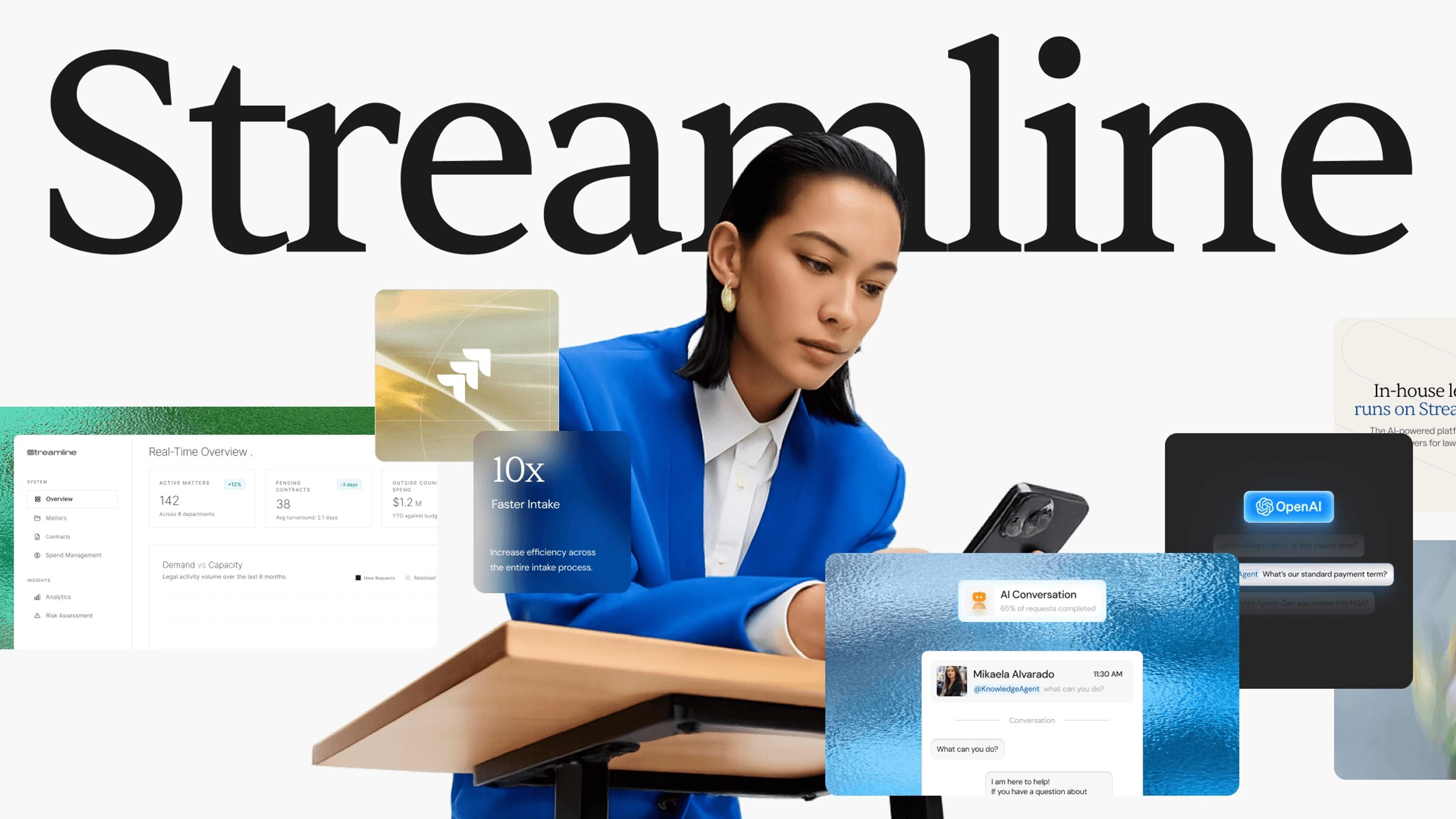
What matters is whether the message changes at all. On Streamline, a legal AI company at Series A, our first three directions pushed colour, gradients and conceptual imagery. They were not lawyer-like, so the brief became "legal-tech serious, modern flavour."
A B2B rebrand has to reach more than the logo and the homepage:
- the sales deck and proposal templates
- the product UI and its emails
- docs and the help center
- the security or trust page
- G2 and Clutch profiles
- the domain and email, if the name changes
Each surface has a reader: a typical B2B purchase involves 13 internal stakeholders and nine external influencers (Forrester, 2026). For the budget, see what a startup rebrand costs.
12 B2B SaaS and AI rebrands, and what each one changed
Nine public B2B software rebrands and three of ours, sorted by type.
| Company | When | Type | Why, in their words | What changed | Who did it |
|---|---|---|---|---|---|
| Slack | Jan 2019 | Brand refresh | Old logo "extremely easy to get wrong" | Logo cut from 11 colours to 4 | Pentagram with Slack's team |
| ElevenLabs | 2025 | Brand refresh | "evolving into an enterprise-ready powerhouse" (basement) | Colour, motion, patterns; logotype kept | basement.studio |
| Dropbox | Oct 2017 | Partial rebrand | Usage "has changed dramatically" | Identity; story moved from files to teams | Collins with Dropbox's studio |
| PolyAI | Oct 2023 | Partial rebrand | Identity "belied its enterprise capabilities" (Focus Lab) | Identity, messaging, website | Focus Lab |
| Cresta | Jul 2025 | Partial rebrand | "our brand needed to evolve too" | First symbol, messaging, website | Motto (identity) |
| FuseAI (our client) | 2026 | Partial rebrand | Ready for its August launch | New logo; site and product restyled | PIXELUP LABS |
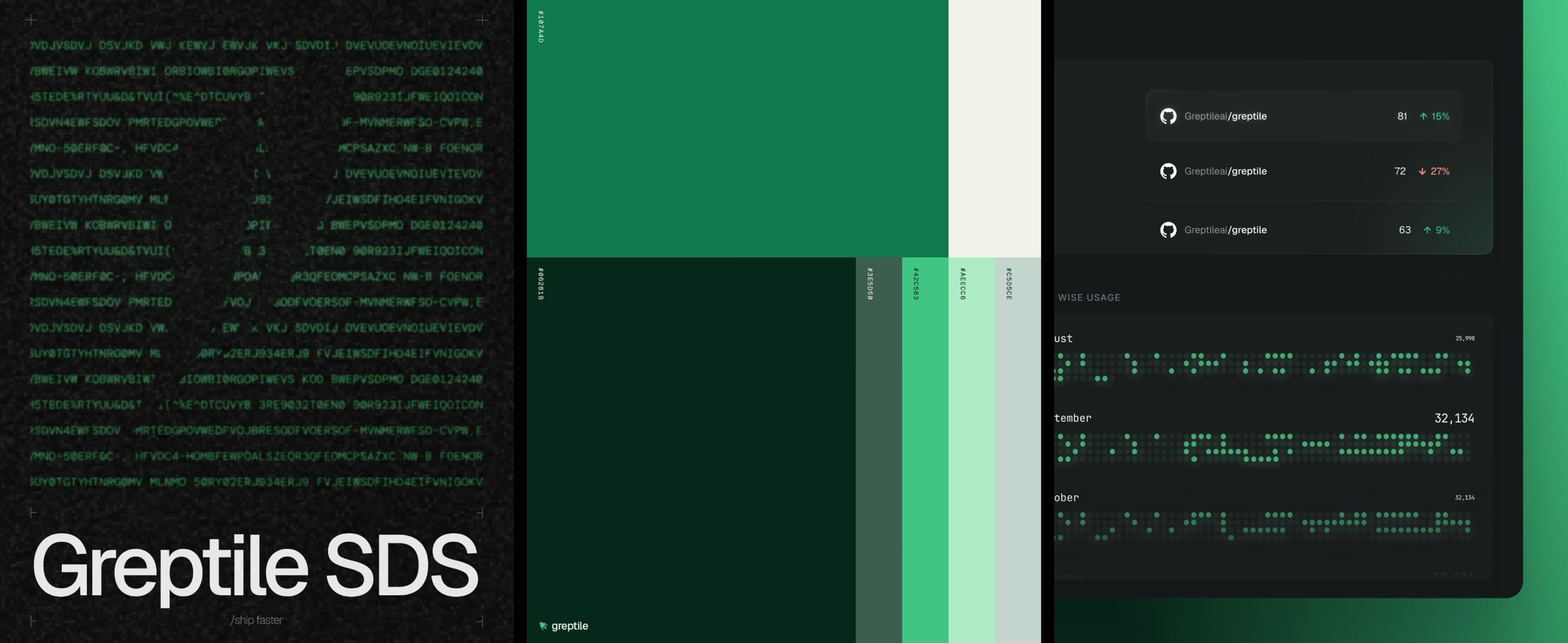
| Greptile (our client) | 2025 | Full rebrand | Moving upmarket | Positioning, identity, site, decks, design system | PIXELUP LABS |
| Streamline (our client) | 2026 | Full rebrand | Repositioning for enterprise | Positioning, identity, site, design system | PIXELUP LABS |
| Vercel, was ZEIT | Apr 2020 | Full rebrand, renamed | "this new focus merited a new identity" | Name and logotype, with a $21M Series A | Name by Lexicon Branding |
| Shortcut, was Clubhouse | Jul 2021 | Full rebrand, renamed | Clubhouse the audio app "became so big so fast" | Name and domain | Not credited |
| Windsurf, was Codeium | Apr 2025 | Full rebrand, renamed | Users "already recognize us more frequently as Windsurf" | Company renamed after its editor | Not credited |
| Ona, was Gitpod | Sep 2025 | Full rebrand, renamed | "outgrown our name" | Name, domain, products | Not credited |
What the nine public rebrands show:
- Renames say why in one line. Four of the nine changed the name: a new focus, a name clash, a product people knew better, a company that outgrew its name.
- Rebrands cluster around money. At least six of the nine landed within a year of a funding round or a public listing.
- Studios do the look, not the name. All five identity rebrands credit a design studio. None of the four renames credits one for the new look.
Method: B2B software, public and dated, not picked for success. Each checked on the company's or studio's own page, October 27, 2026.
Sources: Slack, Pentagram, basement.studio on ElevenLabs, FuseAI, Dropbox, Collins, Focus Lab on PolyAI, Cresta, Greptile, Streamline, Vercel, Lexicon Branding, Shortcut, Windsurf, Ona.
What are the risks of rebranding?
The rebrand failures everyone cites are consumer brands with decades of equity. A Series A B2B company has little of that to lose. Its real risks are a rename's trademark and search costs, and a rollout that leaves the website and the sales deck telling different stories.
A rename
What goes wrong: A new name needs a trademark, a domain and a search history.
Who it hits: Companies whose buyers find them by name.
What to do: Clear the trademark first. The USPTO's total processing time averaged 10.03 months in the first half of fiscal 2026. Keep old-domain redirects for at least a year: in SALT.agency's study of 1,052 domain migrations, the median site took 304 days to recover.
A half-finished rollout
What goes wrong: The website, the deck and the product tell three stories, and a buyer mid-procurement reads a new name as a new company.
Who it hits: Sales-led companies selling to a committee, most of all mid-deal.
What to do: Ship every surface on the same day, and tell open accounts first. In a Gartner survey of 632 B2B buyers, fielded in August and September 2024, 69% reported inconsistencies between a vendor's website and its sellers.
Losing recognition people already have
What goes wrong: You drop a mark people know. Gap swapped its blue-box logo in October 2010 and brought it back about a week later. After Tropicana's 2009 carton redesign, Ad Age reported the line's sales fell 20%.
Who it hits: Mostly consumer brands with years of recognition.
What to do: Keep the parts people recognise.
The brand drifting after launch
What goes wrong: Nobody owns the system, so the brand decays.
Who it hits: Companies that got files instead of a system.
What to do: Leave a design system with an owner. Our 2025 rebrand and design system for Greptile shipped 200+ components with developer-first docs.
When not to rebrand
Don't rebrand if you're pre-PMF, if the product is the real problem, or if only the look has aged. Each has a cheaper fix.
- Pre-PMF or mid-pivot: there's nothing settled to amplify. Use a template and Claude Code, honestly, and come back after the pivot.
- The product or traction is the problem: a rebrand won't fix churn.
- The message still works: a brand refresh, often from a freelancer or a design subscription, is enough.
- The name has recognition and no legal problem: keep it.
- Deals are open and you can't update every surface yet: wait.
If none of those is you, book a call.
Who should run your rebrand?
A founder-led B2B company on a deadline needs a boutique sprint. A committee, a merger or several brands needs a bigger studio. A new name needs a studio that names companies.
The first case is ours. A Brand Sprint costs $15,000 and takes two to four weeks; brand and website run $25,000 to $40,000 over six to eight weeks. We ran the 2025 rebrand and design system for Greptile, and Greptile says demo bookings doubled after the 2025 rebrand and website went live.
We don't name companies. C42D runs naming "from strategy to screening," and Metabrand lists naming in its strategy work.
A committee or post-merger rebrand fits Focus Lab's Structural Rebrand: from $25,000 a month, typically three to five months (checked October 27, 2026). Compare branding agencies for B2B AI and tech startups, or book a call.
How we know
We're a ten-person studio with 38 projects for funded B2B and AI startups, including Greptile, Sully, Reducto and Bland. Every public review is 5.0: eight on Contra and one on Clutch.
Jerry Liu of Dayflow (YC S24) wrote on Contra: "Daksh has top tier design sense. Would recommend working with him on branding."
FAQ
What does rebranding mean?
Rebranding means changing how a company is perceived: its message, its look or its name. Slack's 2019 logo change was a refresh. ZEIT becoming Vercel in 2020 was a full rebrand.
What are the different types of rebranding?
Three: a brand refresh changes the look (Slack, 2019), a partial rebrand changes the message or identity (PolyAI, 2023), and a full rebrand changes the positioning, sometimes the name (Vercel, 2020).
When is it necessary to rebrand a company?
When the brand stops matching what you sell or who buys it: a raise, a move upmarket, a merger, a new product line, or a name you can't trademark. Gitpod renamed itself Ona in 2025 because it had outgrown its name.
What are the benefits of rebranding?
A rebrand that changes the message makes the company easier to choose, and enterprise buyers stop hesitating. Greptile says demo bookings doubled after the 2025 rebrand and website went live.
What is rebranding a product?
Product rebranding changes one product's name or identity while the company brand stays. Square did the reverse in 2021: it renamed the company Block and kept Square for its seller business.
Does a rebrand mean changing your company name?
No. Most rebrands keep the name, and a rename adds months of legal work. Monumint picked its name before we started, so its full rebrand and one-page site took seven weeks with no naming inside.
What happens after a rebrand launches?
Every surface switches on the same day, open accounts hear about it first, and someone owns the design system from then on. Retainers are optional, from $6,000 a month with no minimum term; about 10 of our first 35 projects continued on one.
What's another word for rebranding?
Repositioning, brand refresh and brand overhaul, though none means quite the same. Repositioning changes what you say, a refresh how you look, and a rebrand like Dropbox's in 2017 does both.
The bottom line
Rebranding is a positioning decision with a design deliverable. Make the decision first, ship it everywhere on the same day, and leave a system behind so it's still true in a year. See our prices on Contra, or book a call.