A value proposition is the line on your homepage that says what you sell, who it's for and why they should care. Good value proposition examples from funded B2B startups: Griffin's "The bank you can build on", Krida's "Make every commercial banker your best banker." and Glide's "Stop chasing spreadsheets. Run your business from one place." We captured 57 of these on November 19, 2026: the median headline is six words, and none contains a number.
We curate designforb2b.com, the gallery these lines come from. Sites we built and our own clients are left out of everything below. If you're rewriting your homepage after a raise, start with the table.
| Pattern | Share of the 57 | Example | Use it when |
|---|---|---|---|
| Category | 20 (35%) | "The managed cloud for Laravel" (Laravel Cloud) | Buyers already search for the category |
| Outcome | 15 (26%) | "Help your team reach proficiency faster" (Solidroad) | The result is easier to want than the product |
| Stance | 9 (16%) | "Time is money. Save both." (Ramp) | The category is crowded |
| Brand line | 7 (12%) | "No time to wait." (Giga) | The second line explains |
| Mission | 4 (7%) | "AI for all from India" (Sarvam) | You're selling the bet |
| Old way | 2 (4%) | "Stop chasing spreadsheets." (Glide) | Everyone hates what you replace |
What is a value proposition?
A value proposition is the promise a company makes in the first screen of its website: what the product is, who it's for and what the buyer gets. On a B2B homepage it's two lines: the headline makes the claim and the line under it explains.
It isn't a tagline, which is the brand phrase under the logo. It isn't a positioning statement either. That's the internal sentence your team agrees on before anyone writes the homepage.
1. Category value proposition examples: say what it is
A category value proposition names the kind of product in the headline, often as "The X for Y". It's the most common pattern, on 20 of the 57 startups. It fails when ten competitors can make the same claim.
Hex (Series D): "The Analytics platform for humans and agents"
Second line: "Rethinking BI Conversational analytics and Context management for the agentic era." "Analytics platform" is a category buyers already shop for. "Humans and agents" adds a second user without leaving it.
Mintlify (Series B): "The intelligent documentation platform"
Second line: "Self-updating documentation for startups, enterprises, and agents." The headline claims the category. The second line names three readers, and one of them is a machine.
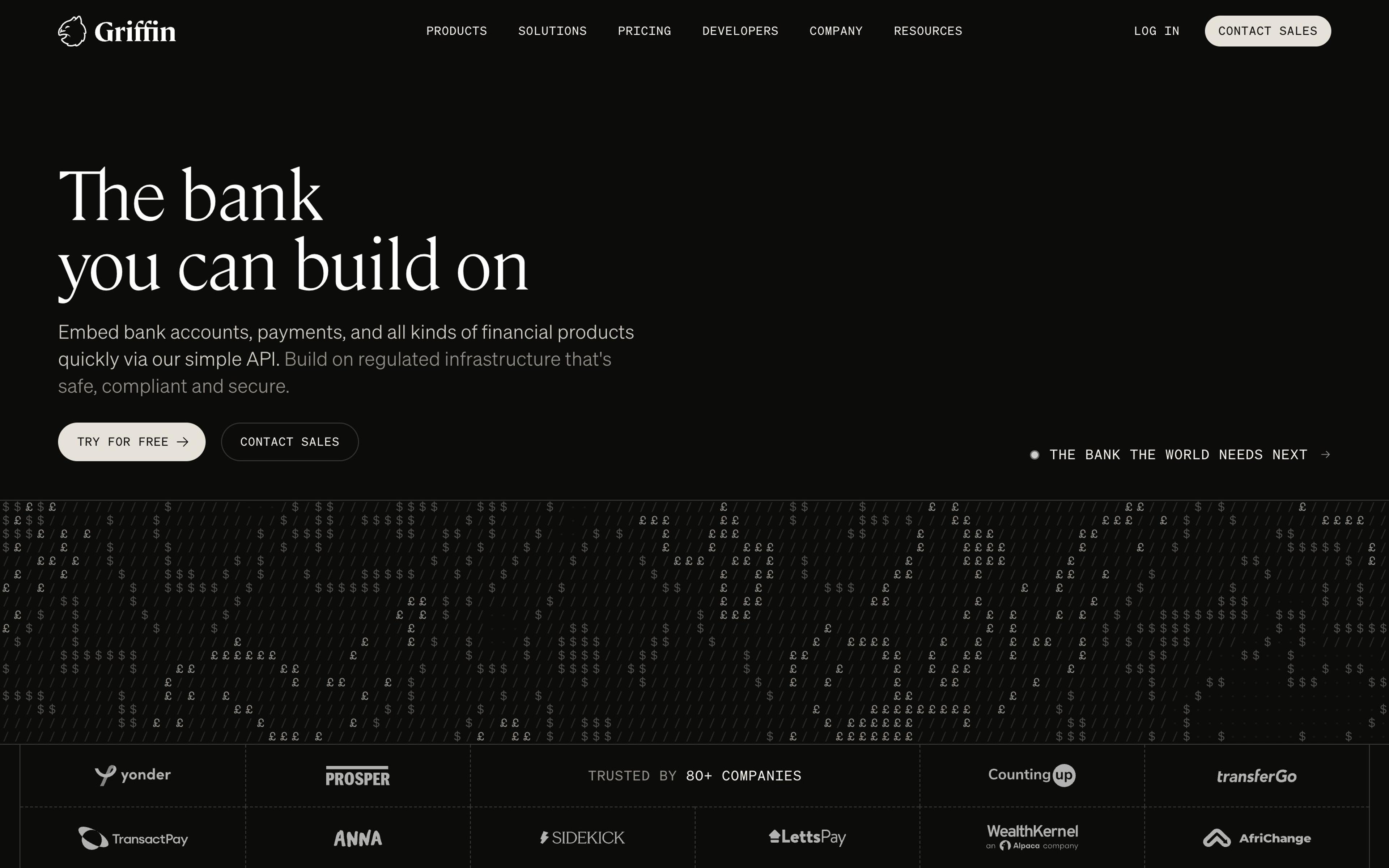
Griffin (Series B): "The bank you can build on"
Second line: "Embed bank accounts, payments, and all kinds of financial products quickly via our simple API. Build on regulated infrastructure that's safe, compliant and secure." Six words say it's a real bank that developers build on. The second line answers the compliance question.
Laravel Cloud (Series A): "The managed cloud for Laravel"
Second line: "The best place to deploy, run, and scale Laravel applications. Push your code and walk away. We'll handle everything else." One framework, one audience, named in the headline. "Push your code and walk away" is the whole pitch.
Reflag (Seed): "Feature flags on autopilot"
Second line: "TypeScript feature management that gets you back to building, faster." Category and benefit in four words. "TypeScript" in the second line tells the wrong buyer to leave.
Sequence (Series A): "AI-native revenue automation from quote to cash"
Second line: "Unlock error-free revenue collection at scale. Handle custom contracts, complex pricing, and run receivables on autopilot." "Quote to cash" is the finance team's own phrase for the job, so the scope is clear at once.
Lemni (Pre-seed): "Ai agents for all your customer interactions"
Second line: "With Lemni, you can set up custom Ai agents in minutes, so every customer interaction stays personal..." A plain category line. The second line's promise is speed: agents set up in minutes.
Rulebase (Pre-seed): "AI for the enterprise back office."
Second line: "Give Rulebase agents a goal, an SLA and your operating rules. Agents investigate, coordinate and follow through across your systems and teams over days or weeks." The headline names the department. "Over days or weeks" separates it from a chatbot that answers once.
Exa (Series C): "The world's data for AI agents"
Second line: "Search the largest index of public web and private information." The buyer in the headline is the AI agent itself, and "the world's data" says what it gets.
General Intelligence Company (Seed): "AI that runs businesses autonomously"
Second line: "The General Intelligence Company is an applied AI lab working towards automating businesses full-stack with AI." The headline is the product in five words. The second line says who's behind it: an applied AI lab.
Also using it: Framer, Isidor, Muse Software, Native, Shelby, Smallest AI, Stripe, TypeSafe AI, V7 and Walrus.
2. Outcome value proposition examples: say what the buyer gets
An outcome value proposition tells the buyer what they'll do or have, usually starting with a verb. 15 of the 57 startups use it. The risk is a result so broad that nobody believes it.
Browserbase (Series B): "Give your agents access to the whole web."
Second line: "Browserbase makes the web as reliable and programmable as APIs" One verb, one buyer, one job. The second line compares the web to APIs, which developers already trust.
Solidroad (Series A): "Help your team reach proficiency faster"
Second line: "Training simulations for sales and service teams. Practice customer conversations and software workflows together, before the real job." Time to proficiency is the number a team lead is judged on. The second line says how: practice before the real job.
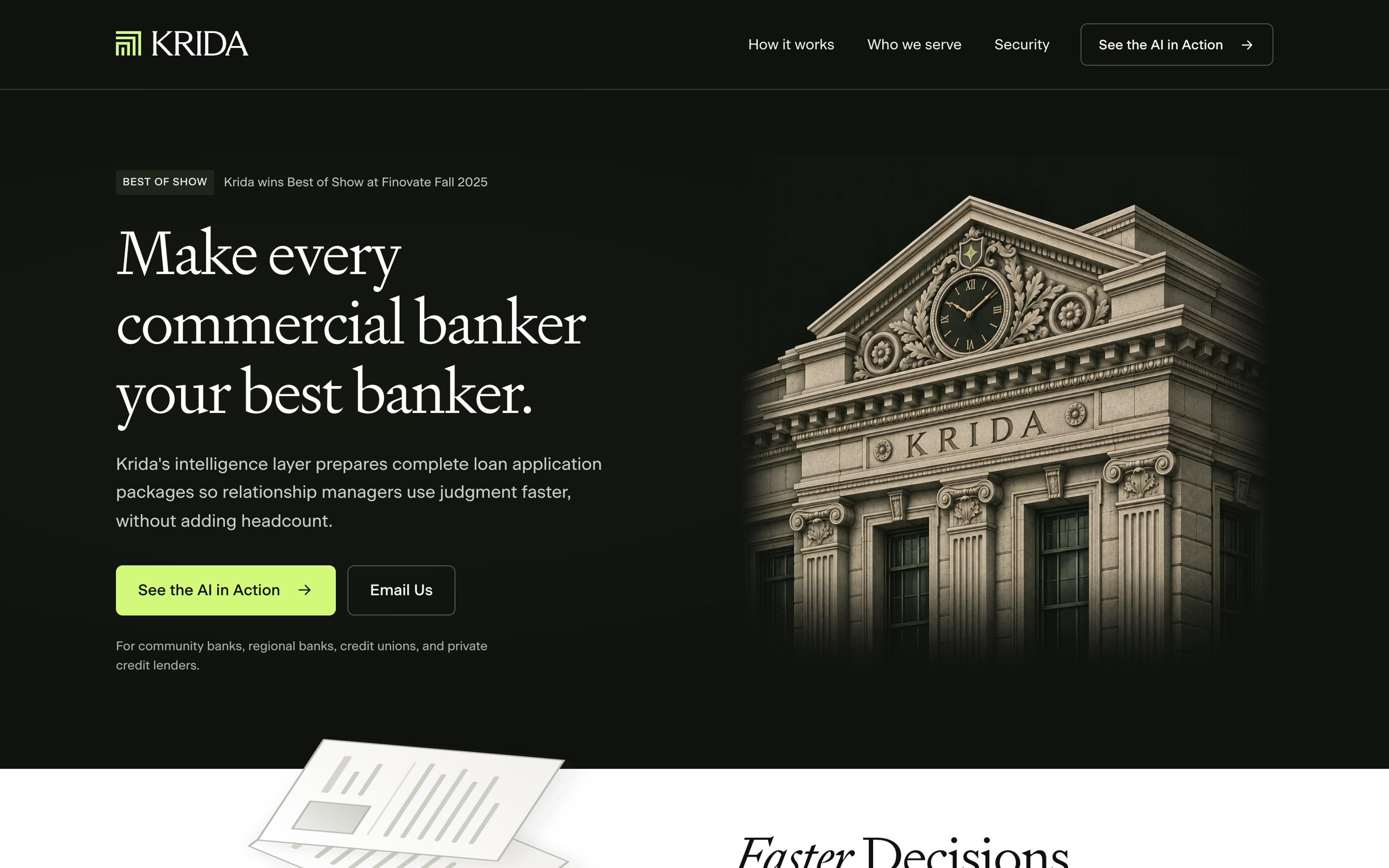
Krida (Seed): "Make every commercial banker your best banker."
Second line: "Krida's intelligence layer prepares complete loan application packages so relationship managers use judgment faster, without adding headcount." It names the buyer by job title. "Without adding headcount" is the part written for the CFO.
Interfere (Seed): "Ship software that never breaks"
Second line: "Interfere empowers engineers, product managers and designers with real-time understanding of previously unseen bugs and issues." Five words an engineering lead wants. The second line is the careful version, and it names three roles.
Canopy (Series A): "Build better B2B lending products."
Second line: "The most flexible loan management system for commercial lenders. Get everything you need to operate & scale secured, revolving, installment, and hybrid products. Your secret weapon for everything post-loan origination." Outcome first. The second line then names the category, loan management, and the buyer, commercial lenders.
Harvey (late stage): "Build a Frontier Legal Organization"
Second line: "The world's top law firms and in-house legal teams trust Harvey with their highest-stakes work." It sells the firm's ambition, not the tool. The second line is the proof: top law firms already use it.
Dispel (Series B): "Security That Makes Industrial Operations Run Faster"
Second line: "OT secure remote access at scale. Connecting vendors, OEMs, and operators to critical systems and data without legacy complexity or delays." It flips the usual trade: security is supposed to slow operations down. "OT" filters the buyer.
Antimetal (Series A): "Production that runs itself."
Second line: "The autonomous system for production that diagnoses, fixes, and prevents issues across your environment." Four words an on-call engineer feels. The second line names the three jobs: diagnose, fix and prevent.
Also using it: Agiloft, Clay, CodeRabbit, Gumloop, Pinecone, PrimeFold and Vestris.
3. Stance value proposition examples: say what you believe
A stance value proposition is a point of view in one or two short sentences. 9 of the 57 startups use it. It needs a plain second line, because the headline alone doesn't say what the product is.
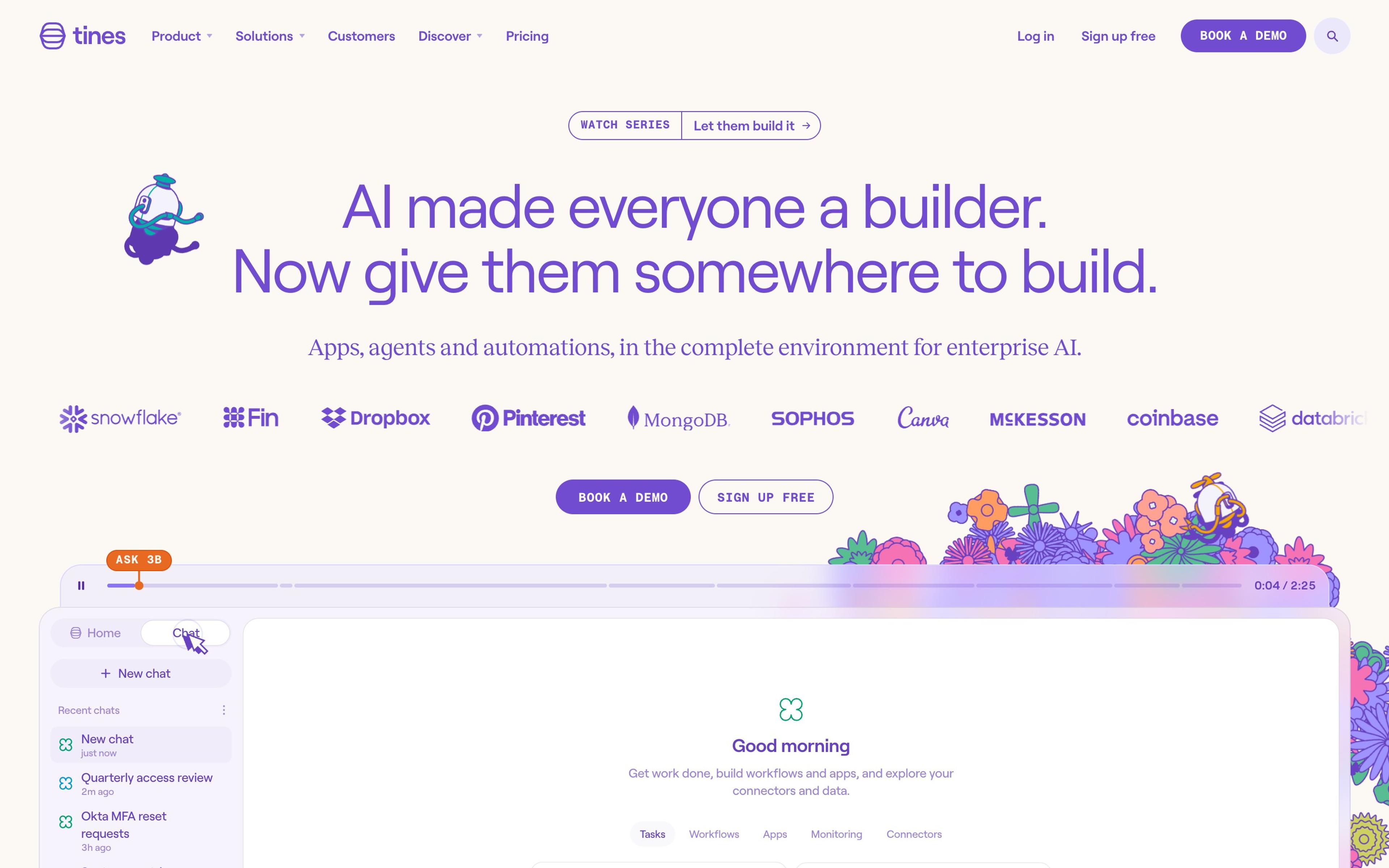
Tines (Series C): "AI made everyone a builder. Now give them somewhere to build."
Second line: "Apps, agents and automations, in the complete environment for enterprise AI." It states the shift first, then the gap the product fills.
Ramp (late stage): "Time is money. Save both."
Second line: "Cards, expenses, bill payments, and banking* – in the blink of AI." Five words turn a cliché into the pitch. The second line lists the products.
Chargetrip (Series A): "A driver's route plan is your revenue plan."
Second line: "Every charge decision has a direct impact on your bottom line. Guide drivers’ decisions with EV route planning, station finding, and more, all tailored to your business goals." It ties a feature, route planning, to the buyer's revenue in one sentence.
Cohere (Series E): "Your AI. Your rules."
Second line: "North by Cohere is a complete agentic enterprise AI platform that you control and deploy on your terms." Four words answer the enterprise fear: who controls the AI. The second line names the product, North.
Voiceflow (venture-funded): "AI agents, built like software."
Second line: "One suite for teams to build, test and ship chat and voice agents. Work in the app, from the API, CLI and MCP, or let Atlas do it for you." "Built like software" tells engineers this isn't a toy. The second line backs it with build, test and ship.
Also using it: Aside, Inversa, Legora and Waabi.
4. Brand-line value proposition examples: let the second line explain
A brand-line value proposition is a short phrase that doesn't say what the product is. 7 of the 57 startups open this way. Read these three headlines alone and you can't tell what any sells.
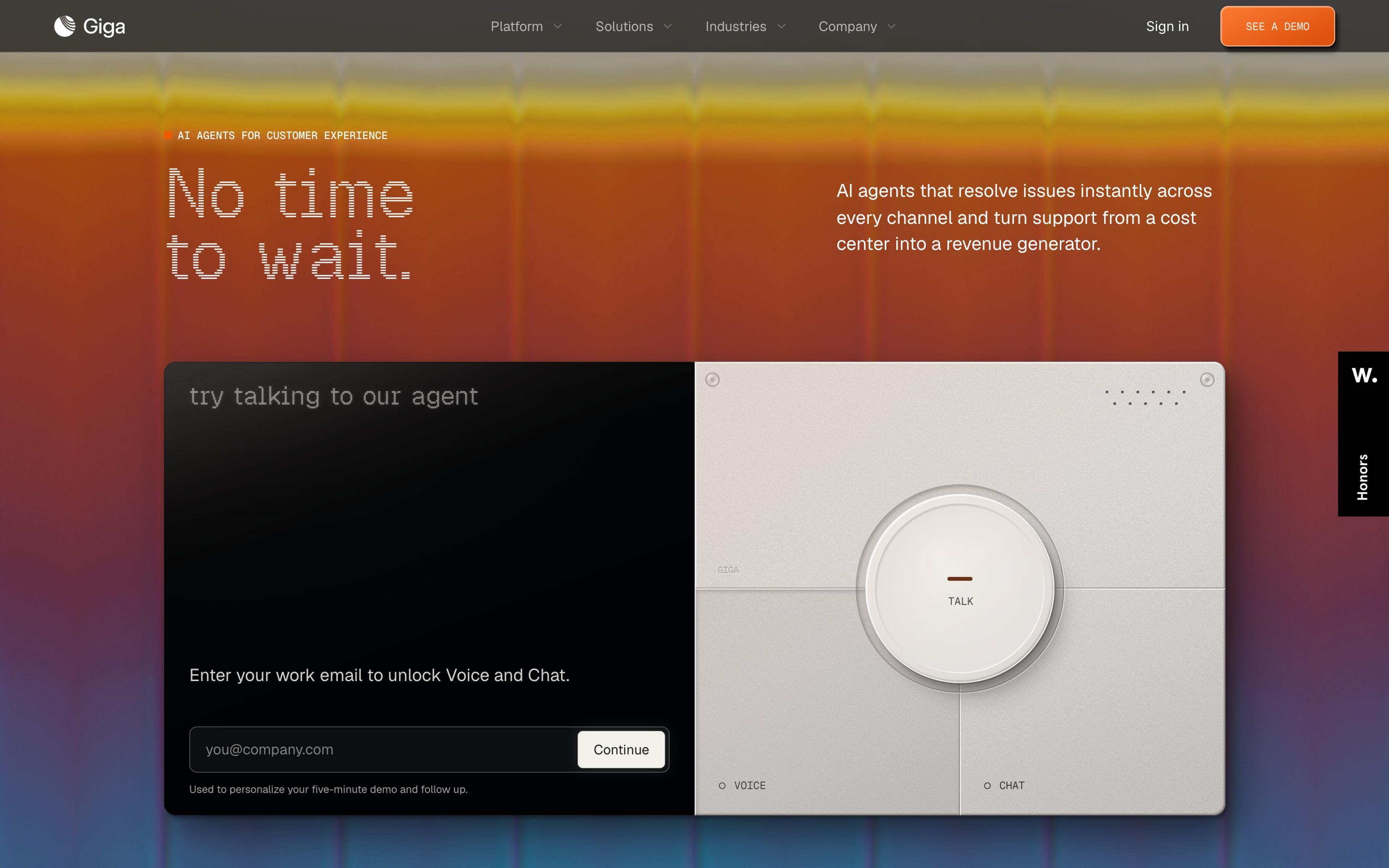
Giga (Series A): "No time to wait."
Second line: "AI agents that resolve issues instantly across every channel and turn support from a cost center into a revenue generator." The headline is a mood. The second line is a full value proposition on its own.
Prime Intellect (Series A): "Own Your Intelligence"
Second line: "Train and deploy custom AI models on an integrated compute, training, and inference stack." Three words about ownership, then the product in one sentence.
Webflow (Series C): "Build for what’s next"
Second line: "Webflow gives every team the tools to build, manage, and grow a website that drives real revenue." A company this known can afford a vague headline. The second line still does the work.
Also using it: Butter, Contra, Sierra and Twin.
5. Mission value proposition examples: say what you're building
A mission value proposition is about the future the company wants, not what the buyer gets today. 4 of the 57 startups use it. It's the wrong line for a team with a quota this quarter.
Normal Computing (venture-funded): "A new paradigm of AI hardware to power human progress."
Second line: "AI co-designed silicon built on new device physics. Partnering with the world's most advanced institutions." The headline is the bet. The second line says what it is in one short sentence: co-designed silicon.
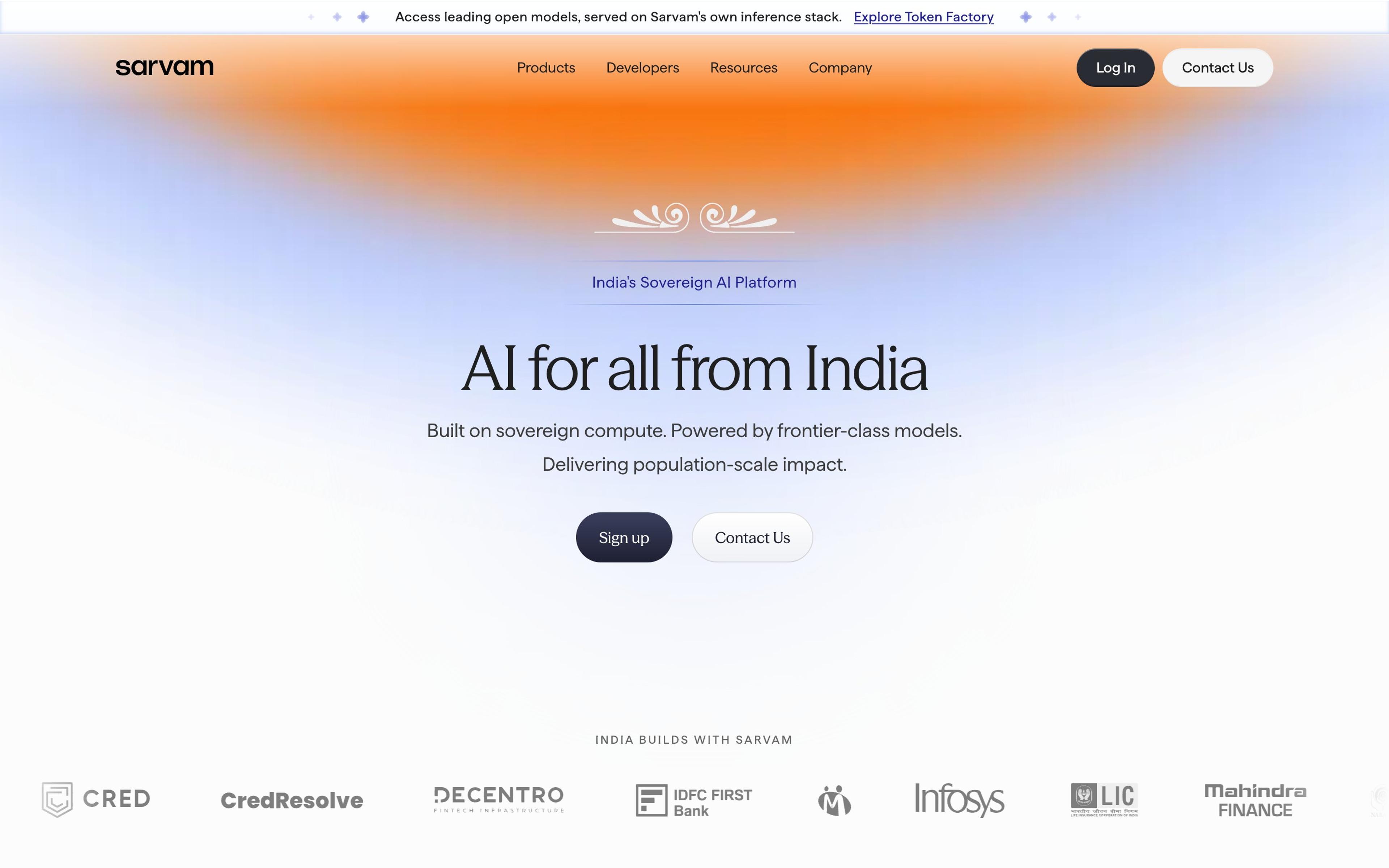
Sarvam (Series B): "AI for all from India"
Second line: "Built on sovereign compute. Powered by frontier-class models. Delivering population-scale impact." Five words carry the customer, the scale and the origin. The second line stacks three short claims behind them.
Also using it: AWE Network and Scout AI.
6. Old-way value proposition examples: say what you replace
An old-way value proposition is built on the thing it removes. Only 2 of the 57 startups lead with it. It needs a second half that says what replaces the old way.
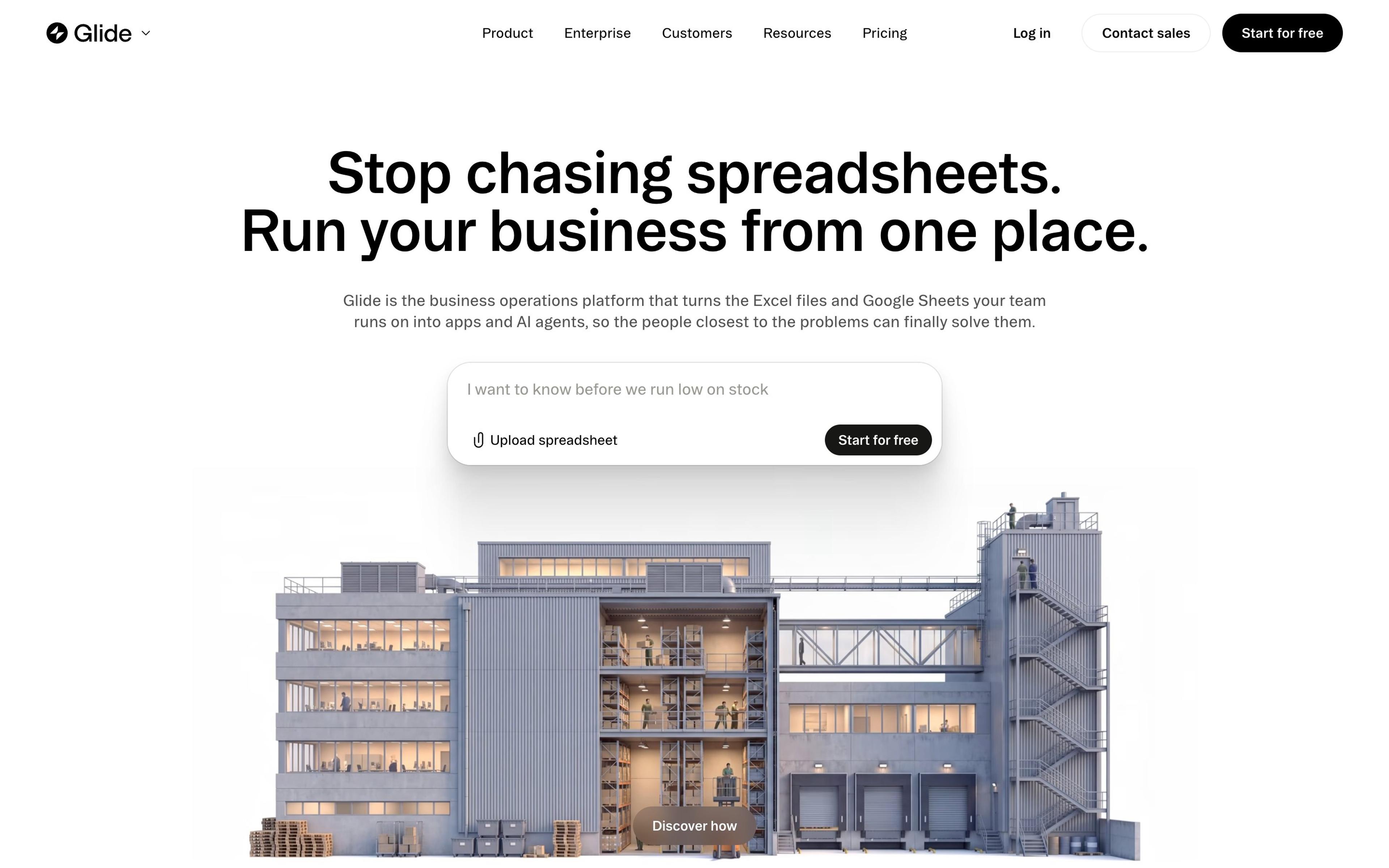
Glide (Series A): "Stop chasing spreadsheets. Run your business from one place."
Second line: "Glide is the business operations platform that turns the Excel files and Google Sheets your team runs on into apps and AI agents, so the people closest to the problems can finally solve them." The enemy has a name, spreadsheets, and the second sentence says what replaces it.
Calendly (Series B): "All the work around meetings, handled."
Second line: "From AI-powered scheduling to automated meeting recaps and follow-ups, get the busywork done with fewer tools and less effort." It names the chore, not the feature. "Handled" is the promise.
No other startup among the 57 uses it.
What do 57 funded B2B startups' value propositions have in common?
They're short, they come in pairs and they avoid numbers. We read the homepage of 57 funded B2B startups, seed to Series C and later, on November 19, 2026.
- Six words. The median headline is 6 words, and 52 of the 57 run under ten.
- Two lines, not one. 47 of 57 (82%) put a second line under the headline. That line runs a median 16 words. Together the pair is about 19.
- No numbers. Not one of the 57 headlines contains a number. One second line does. A number a buyer can check is the easiest way left to stand out.
- "AI" or "agent" in 39% of headlines. 22 of 57 use one of the two words. Count the second line too and it's 31.
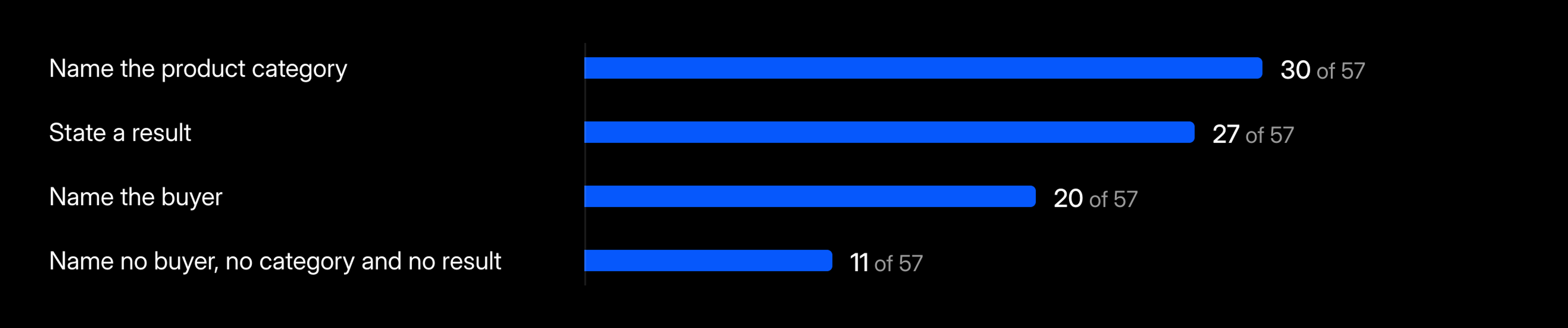
- Most don't say who it's for. Across both lines, 20 of 57 (35%) name the buyer. 30 (53%) name the product category. 27 (47%) state a result.
- One in five say none of it. 11 of 57 name no buyer, no category and no result in either line.
The closest earlier count we found is Pagelint's audit of 24 famous SaaS homepages from July 2026, with a median headline of 7.5 words.
How we picked these value proposition examples
Every company here is a funded B2B startup from our own gallery of 102 sites. We kept the ones tagged seed to Series C and later, then removed the ten sites we built and three clients. That left 57.
Stage comes from the gallery's tags, and we checked the 30 shown against public announcements. That check removed Shelby from the 30: it's a protocol from Aptos Labs and Jump Crypto with no round of its own.
A script opened each homepage once in a real browser and saved the text and a screenshot. Two AI checkers read every screenshot against the text. Two more tagged each pair of lines by written rules, blind to each other, and agreed on 54 of 57 patterns.
No person has scored these lines. We have no sales or conversion data for any company on this page.
The 30 above are our pick, in proportion to each pattern. The stage beside each name is its latest announced round as of November 20, 2026. Dispel's and Krida's come from funding databases.
Slack appears on 8 of the 23 pages we read, with five different lines. Homepages change, so every line here carries one date: November 19, 2026.
A value proposition formula you can fill in
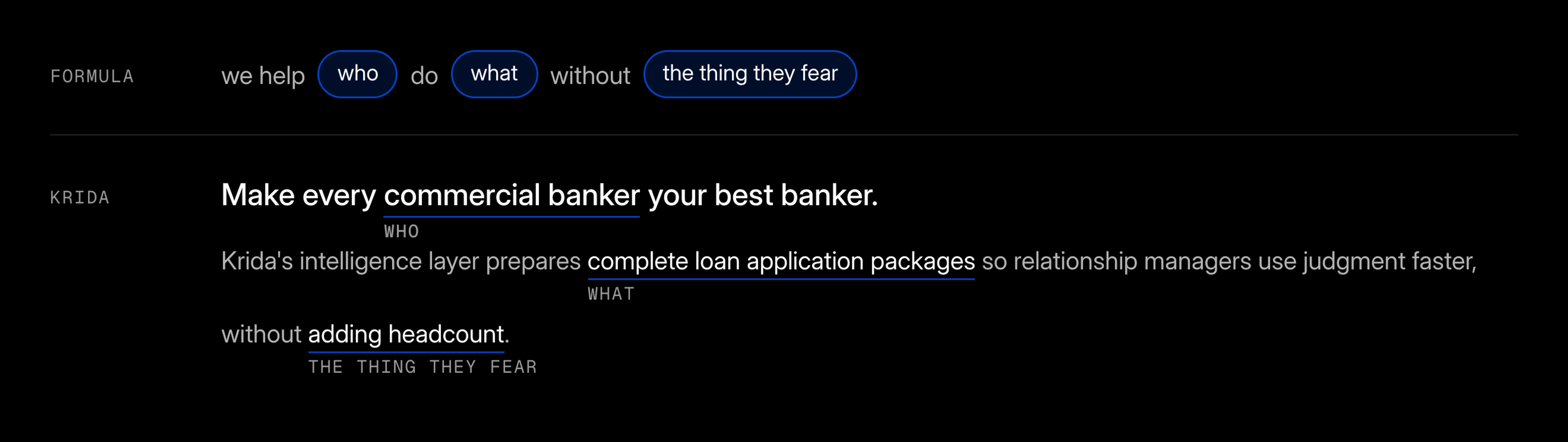
The value proposition formula most of the 57 startup lines fit is: we help [who] do [what] without [the thing they fear]. Krida's two lines fill every slot: commercial bankers, complete loan packages, no added headcount.
Geoffrey Moore's template in Crossing the Chasm asks for six things: the target customer, their need, the product category, the key benefit, the main alternative and what sets you apart. It's a good internal check and too long for a homepage, where the median pair of lines is 19 words. Strategyzer's Value Proposition Canvas is the workshop version.
How to write your value proposition
Write the second line of your value proposition first. It's the plain version of the claim, and 82% of the 57 startup homepages we read have one.
- Name the buyer. A job title, a team or an industry. Only 35% do it.
- Name the product category in words a buyer would search. 53% do.
- State one result. One, not three.
- Cut the headline to six words. That's the median here.
- Check it against your sales deck. If the deck and the homepage tell different stories, the buyer notices.
If you're mid-refresh, rewrite the lines, not the positioning.
Value proposition mistakes: lines that could be anyone's
The most common mistake is a line your competitor could use unchanged. 11 of the 57 startup homepages we read name no buyer, no category and no result in either line.
Buyers notice. In Wynter's June 2026 survey of 100 B2B SaaS marketing leaders, 64% found it difficult to tell vendors apart from their websites and messaging.
The second is leaning on "AI". 22 of 57 headlines say "AI" or "agent", and a word two in five of your neighbours use stops separating you from them.
How to test a value proposition
Run the swap test first: put a competitor's logo over your headline. If the line still reads as true, it isn't yours yet.
Then run a five-second test. Show the first screen to someone outside the company for five seconds, hide it and ask what you sell and who buys it.
When not to work on your value proposition
Don't polish the line before you have product-market fit. It will change.
If your positioning is settled and you only need the words, hire a freelance copywriter. That's cheaper and faster than hiring us. We write a first draft of the lines as part of a brand or website project, and your team rewrites it.
If you need positioning and nothing else, go to a specialist. Fletch sells a two-week homepage positioning sprint for $10,000 to $30,000 by company size. April Dunford runs three-day positioning workshops, from $50,000 for startups (both prices from their own sites, checked November 20, 2026).
And if enterprise buyers doubt you for other reasons, a new headline won't fix that. Book a call with Daksh if you're not sure which problem you have.
How we know
PIXELUP LABS is a ten-person studio with 38 projects for funded B2B startups and 13 YC clients. We take a view on positioning and messaging as part of the design work.
For Workers.io the reframe was from "agents" to "workers". For Sainapse we built the IIRA positioning framework. On Henry Labs the finding was that it sells "an SDK platforms build on, not a shopping app".
The lines on this page are other people's homepages, read from outside. We can't tell you which ones convert.
Cite this data
Sample: 57 funded B2B startups (seed to Series C and later) from the designforb2b.com gallery, homepages captured November 19, 2026, by PIXELUP LABS.
All 57 lines, with pattern, capture time and funding source, are in one free file: the full value proposition dataset (CSV).
- "The median B2B startup homepage headline is six words, and 82% pair it with a second line (PIXELUP LABS, 57 homepages, November 2026)."
- "None of 57 funded B2B startup headlines contained a number, and 39% used 'AI' or 'agent' (PIXELUP LABS, November 2026)."
FAQ
What are good value proposition examples for a B2B SaaS startup?
Griffin's "The bank you can build on", Solidroad's "Help your team reach proficiency faster" and Glide's "Stop chasing spreadsheets. Run your business from one place." are three, each under ten words. All three were live on November 19, 2026.
What are the parts of a value proposition?
A B2B value proposition has four parts in the first screen: a headline, a second line, proof and a button. Of 57 funded startups we checked, 47 have the second line, 14 lead with "get started" and 14 ask for a demo.
What's the difference between a value proposition and a tagline?
A tagline is a brand phrase, like Giga's "No time to wait." A value proposition says what the product is, who it's for and what the buyer gets. Giga's second line does that job: "AI agents that resolve issues instantly across every channel".
How do I write a value proposition for an AI product?
Say what the product does for a named buyer before you say "AI". 22 of the 57 headlines we read use "AI" or "agent", so the word alone no longer sets you apart. Krida never says "AI" in its headline: "Make every commercial banker your best banker."
What do I do after I've written my value proposition?
Put it in the first screen with one button and one piece of proof. 8 of the 57 startups we checked show no button under the headline. Then run the swap test and carry the same line into the sales deck.
The bottom line
Ours: the Brand Sprint is $15k and takes 2–4 weeks, brand plus website is $25–40k in 6–8 weeks, and the retainer starts at $6k a month, all on our Contra services page. Book a call with Daksh.
A value proposition isn't the cleverest line you can write. It's the first true thing a buyer needs to hear.